Affiliate Email Marketing 101: From List Building to Deliverability
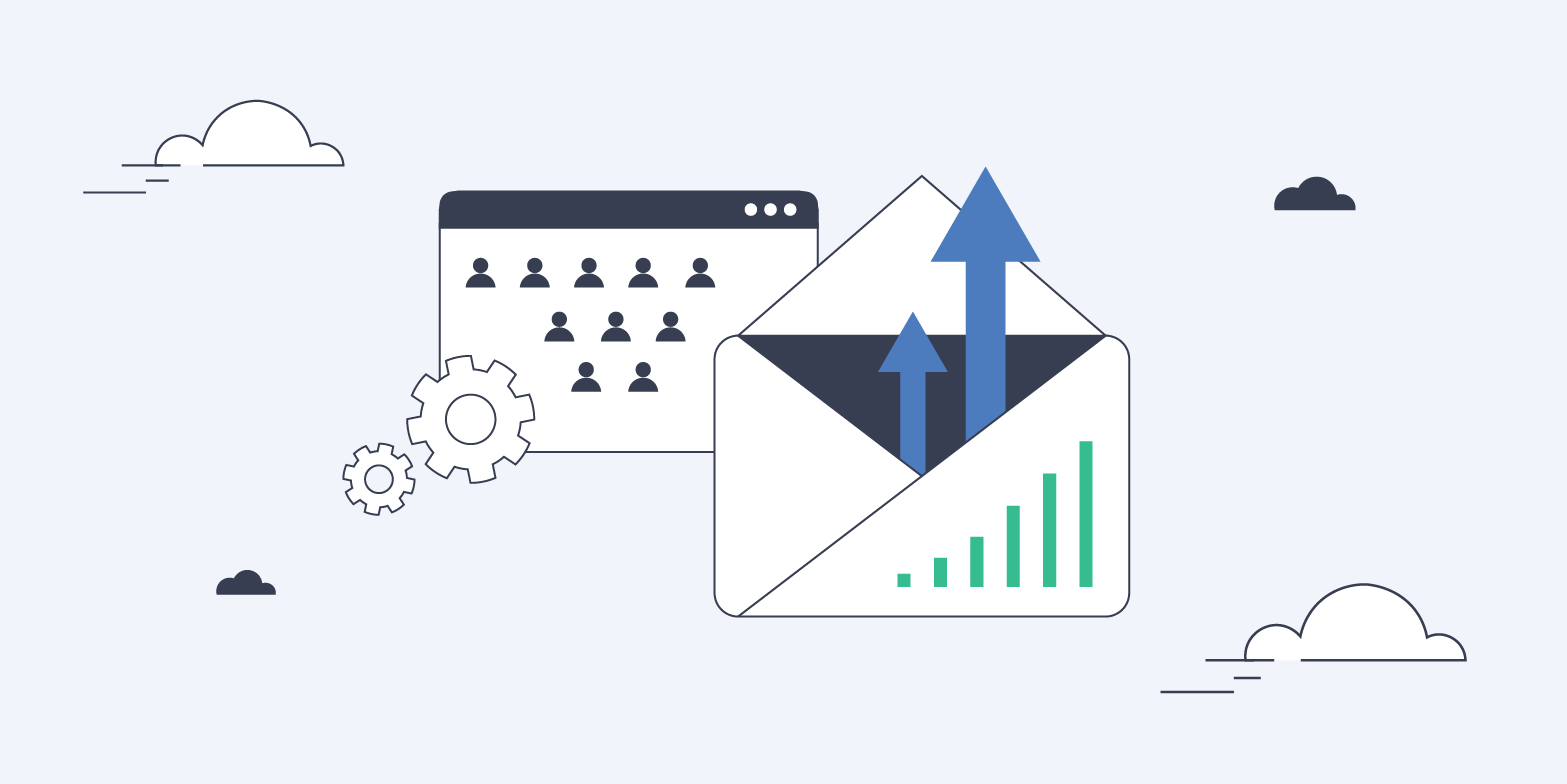
With an average ROI of up to 3,600%, email is one of the most profitable affiliate marketing channels. In fact, any business that depends on leads can benefit from a personalized email sequence that resonates deeply with the subscriber’s needs and wants.
The question is, though: How exactly do you write effective emails?
People unfamiliar with affiliate email marketing may think it is a combination of good writing and automation, which is only partially true. In 2026, you also need website optimization, reputation building, list management, and other components covered in this article.
Read on to explore how to get started with email affiliate marketing.
Affiliate Models That Benefit From Email Marketing
To begin with, not every affiliate needs email marketing. For example, cost per mille (CPM) businesses earn from website impressions, and driving them through email campaigns is less effective than through SEO or paid ads.
Other affiliate models that hardly benefit from email marketing are:
- Coupon-based: Customers are ready to purchase and don’t require persuasion.
- Urgent pay per call: Customers look for in-the-moment solutions and favor search engines.
For cost per lead (CPL) and cost per action (CPA) models, email marketing is a whole different story. They align well since email is perfect for converting prospects into form submissions and actions that advertisers are willing to pay for.
Building Affiliate Marketing Email Lists
Before sending emails, you need to find recipients. This process is called list building, and, by and large, it consists of two steps.
Set Up Lead Magnets
It’s difficult to compel users to share their emails without giving something in return – a lead magnet.
Here are some popular lead magnets:
| Magnet type | What it offers | Niche |
| Cheat sheet | A guide that helps users simplify complex workflows, such as copywriting or video editing. | Courses and professional software |
| Software comparison | A detailed article or video comparing software based on firsthand experience. | B2B solutions |
| Interactive tool | A web tool for specific calculation, comparison, data lookup, etc. | Any |
It’s best to place a lead magnet on a dedicated landing page, targeting users who are most likely to be interested in the offer. Before accessing it, they would need to complete a form and share their email address and any other information you request.

Build Email Lists
Once your lead magnet starts collecting leads, you need to sort them into email lists according to pre-set criteria. For example, you can assign leads with a higher budget – or higher score if you score leads – to one list and the rest to another.
How To Write Copy for Affiliate Email Marketing
Subject Line
As the first thing a recipient sees, the subject line is extremely important and essentially determines whether you get opens or not.
Here are some general subject line guidelines:
- Keep your subject line up to 50 characters so it’s fully rendered on desktop and mobile
- Clearly communicate your value proposition and ensure it’s aligned with customer needs
- Avoid excessive punctuation and capitalization, as well as aggressive marketing phrases
- Use hooks to elicit curiosity and entice users to open and read your email
Overall, a good subject line and email in general should resonate with the subscriber’s pain points and desires, which you can identify by tracking leads and building detailed ICPs.
Email Body
In the body of the email, your goal is to present what you’re promoting in an engaging and streamlined way. In the first paragraph, address a reader’s problem and position your product or service as its direct solution. Next, explain how exactly the problem is solved with your product.
For top- and mid-funnel emails, the structure stays similar; the only difference is that these emails are more informational than promotional. You can still add several affiliate links, but without active pitching.
Last but not least, to make your email readable, divide it into 2-4-sentence paragraphs and keep it short and sweet overall. Rewrite and remove anything that doesn’t add value or feels cumbersome.
CTA & Graphics
An email is traditionally closed with a CTA. However, to drive more clicks, you want to make that final line concise, descriptive, and focused on a single action:
- Talk to sales right now
- Explore software comparison
- Take a quick product tour
It’s also a good idea to amplify your CTA with graphics, from highlighting it with color to embedding it into an attention-grabbing banner. That said, make sure not to overdo it: allocate no more than 20% of your email space to visuals.
Affiliate Marketing Email Automation
Email automation software allows you to run campaigns end to end while keeping them personalized and effective.
Email Sequences
Email sequences – pre-defined email strings tailored to customer journey stage goals – are at the core of customer nurturing, helping you drive subscribers from awareness to purchase to possible brand advocacy and recurring purchases.
Here are the most common sequence types:
| Type | Description | Customer journey stage |
| Opening sequence | Builds trust by delivering lead magnets, helpful information, and resonating with users. | Awareness |
| Nurturing sequence | Keeps providing high-value content, making you an authority and priming users for sales pitches. | Consideration |
| Closing sequence | Drives target actions by articulating why users need a specific product or service. | Purchase |
| Re-engagement sequence | Reignites a prospect’s interest with time-limited, highly personalized offers and other strong incentives. | Purchase |
The length of each sequence should be tailored to the customer journey. In B2B, for instance, consideration stages require product tours, demonstrations, and sales negotiations.

If/Then Logic
If/then (trigger/action) automation is the process of dynamically adjusting email sequences based on recipient behavior. Users who actively reply and interact with your website are considered high-intent and require a different approach than those who leave your emails unopened.
Common automation triggers include:
- Link click
- Email open
- Reply
- Inactivity
- Subscription canceled
- Survey or quiz completion
And these are examples of triggered actions:
- Changing email sequence
- Updating suppression lists
- Moving a recipient to another email list
Pacing is crucial for if/then automation. During a nurturing sequence, you want to keep your cadence moderate, sending 2 – 3 emails a week. However, once a user clicks a link or completes your survey, it makes sense to send an immediate follow-up.
Affiliate Marketing Email Deliverability
Email deliverability measures whether your emails reach inboxes or get blocked, flagged as spam, or bounce. It goes without saying that high email deliverability – ideally, as close to 100% as possible – is a must for the success of your email campaigns.
Deliverability-wise, there are three domain name system (DNS) records that allow email providers to authenticate your sending domain: SPF, DKIM, and DMARC. These protocols also prevent bad actors from sending on your company’s behalf.
Here’s how they work: The authentication records are set up inside your DNS management system. More often than not, this requires creating and publishing special TXT files, but some solutions offer more beginner-friendly options, such as Cloudflare’s Email Security DNS Wizard.
Once SPF, DKIM, and DMARC records are set, you need to wait up to 48 hours before verifying them. You can do it the following way:
- Send an email to your personal account and open it.
- Click the three dots next to the email and select “Show original.”
- Locate the SPF, DKIM, and DMARC rows to ensure each status shows “PASS.”
You can also verify your domain using dedicated tools or email service providers (EPSs).
Warm-Up
To kick things off with affiliate email marketing without landing in spam folders, you need to build trust with ESPs by gradually increasing your sending volume and engagement, which is called an email warm-up.
Here’s an email warm-up in a nutshell:
- Sending starts with 5-20 emails on day one
- Add around 10 emails per day
- Run the warm-up for 2-4 weeks while tracking engagement
The good news is that there are email warm-up tools you can use to automate the process. That said, treat them with caution, since most email providers prohibit artificial warm-up.
Sender Reputation
Sender reputation is the combination of your domain and IP address scores, and it directly affects email deliverability.
These factors erode sender reputation:
-
- Spam complaints: A recipient marks an email as spam
- Bounces: An email is rejected by a receiving email server
- Authentication: A sender doesn’t pass SPF, DKIM, or DMARC protocols
- Engagement signals: Recipients don’t open and interact with emails
Then again, you can monitor sender reputation using ESPs or other tools. For example, if you’re sending from Gmail, you can use Google Postmaster Tools, which is entirely free and helps stay on top of both domain and IP health.
Aside from content quality, authentication, and warm-up, list hygiene – scrubbing your email lists of non-existent, inactive, and low-engagement recipients – is another important contributor to sender reputation. It boils down to suppressing bounced inboxes, recipients who mark you as spam, and unsubscribed users; managing inactive leads; and verifying your lists to flag and remove other toxic addresses.
Affiliate Marketing Email A/B Testing
No matter how good your email template is, there’s always room for improvement. A/B testing allows you to compare email component variations – subject line, body copy, visuals, etc. – against each other to identify the best performers, thereby improving your conversions and deliverability.
Here’s how it works:
- Form a hypothesis on why an email needs improvement
- Create a new version of the element you plan to test
- Split your email list and send each half a different email version
- Measure and compare email versions and use the winning one
The best part about A/B testing is that it surfaces audience insights that can be applied across your entire marketing. For example, you may learn that a specific benefit drives users more strongly than another, which suggests you may want to focus on it in other channels.
Important: A/B testing is viable only if your list contains at least 1,000 subscribers – otherwise, the margin of error makes the results unreliable.
Join as an affiliate and start your journey today, or contact us if you have any questions.
Frequently Asked Questions
How to build an email list for affiliate marketing?
Building your affiliate email marketing list requires a strong lead-capture mechanism. A common blueprint is an optimized website that collects user emails through lead magnets deployed on specialized landing pages.
How do I create engaging email campaigns that convert in affiliate marketing?
Converting users through affiliate email marketing starts with segmenting your audience into lists. Then, you need to launch personalized email sequences for each segment, driving engagement by tapping into recipients’ pain points and desires.
What software do I need for affiliate email marketing?
Indispensable affiliate email marketing stack components are DNS hosting to obtain and configure a sending domain, and an email service provider (ESP) to segment an audience into lists, automate campaigns, track deliverability, and more.